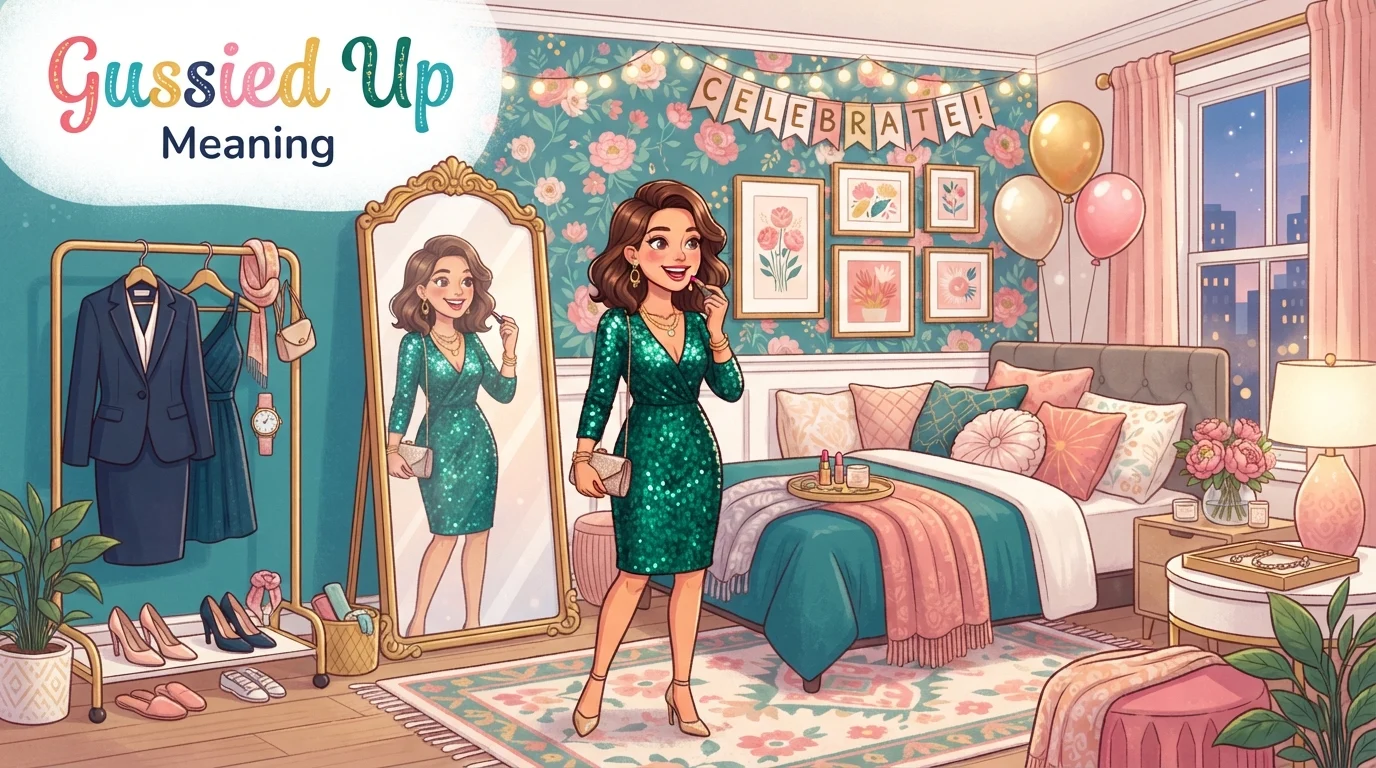
Have you ever heard someone say, “She really got gussied up for the party”? This expression is an informal way of saying that someone has dressed up or made an extra effort to look attractive. However, the phrase “gussied up” is not limited to clothing. It can also describe a room that has been decorated, a car that has been improved, or a simple meal that has been made more appealing.
Common in American English, “gussied up” adds a friendly, conversational tone to everyday speech. It often suggests that someone or something looks nicer, fancier, or more impressive than usual. Whether you are learning English vocabulary, improving your conversational skills, or trying to understand an expression in a book or movie, knowing how to use this phrase can be helpful. Let’s explore its meaning, origin, pronunciation, examples, synonyms, and common usage.
Quick Answer: What Does Gussied Up Mean?
Gussied up means dressed up, decorated, or improved to look more attractive, stylish, or impressive. It is an informal American English expression used when someone makes an extra effort to improve their appearance or the appearance of something.
Examples:
- She got gussied up for the wedding.
- They gussied up the living room before the guests arrived.
- He wore a gussied up version of his usual outfit.
In simple terms, gussied up means made to look nicer than usual.
What Does Gussied Up Mean in Different Contexts?
The expression can describe people, clothing, places, objects, and even food. Its exact meaning depends on the situation.
1. Dressing Up or Improving Personal Appearance
The most common use of “gussied up” refers to someone making an extra effort to look attractive. This may involve wearing stylish clothes, fixing their hair, applying makeup, or adding accessories.
Examples:
- She got gussied up before going to the dinner party.
- Everyone was gussied up for the graduation ceremony.
- He looked completely different after getting gussied up for the celebration.
2. Decorating a Place
You can also use the phrase when someone improves the appearance of a room, house, office, or other place.
Examples:
- They gussied up the house with flowers and colorful lights.
- We gussied up the old living room before the family arrived.
- The hotel lobby was gussied up for the holiday season.
3. Improving the Appearance of Objects
“Gussied up” can describe making an ordinary object look more attractive through decoration, repairs, or stylish additions.
Examples:
- He gussied up his old car with new wheels and fresh paint.
- She gussied up the plain dress with a stylish belt.
- They gussied up the furniture with decorative details.
4. Making Food Look More Appealing
The expression can also refer to improving the presentation of food by adding toppings, sauces, or attractive decorations.
Examples:
- The chef gussied up the simple meal with fresh herbs.
- She gussied up the cake with strawberries and cream.
- We gussied up the basic salad with colorful vegetables.
Origin of the Expression Gussied Up
The exact origin of “gussied up” is uncertain, but the expression is associated with American English and became popular in the early twentieth century.
The word “gussy” may have developed from the name Gus, possibly a nickname for Augustus. However, the precise connection between the name and the expression has not been firmly established.
Over time, “gussy up” came to mean dressing, decorating, or improving something to make it look more attractive. Today, the expression is commonly used in informal conversations and storytelling.
How to Use Gussied Up in a Sentence
Here are some practical examples that show how the expression works in everyday English.
- She got gussied up for her birthday dinner.
She dressed nicely and made an extra effort with her appearance. - The children were all gussied up for the school performance.
The children were wearing special or attractive outfits. - He gussied up his old car with new wheels.
He improved the car’s appearance. - We gussied up the backyard before the family gathering.
We decorated and improved the backyard. - The simple cake was gussied up with fresh strawberries.
The cake was made more attractive with decorations. - She always gets gussied up when she goes out with her friends.
She makes an effort to look stylish when going out. - They gussied up the office for the annual celebration.
They decorated the office to make it look festive. - The restaurant gussied up its menu with colorful photographs.
The restaurant improved the menu’s presentation. - I need to get gussied up before the guests arrive.
I need to make myself look presentable before the guests arrive. - The old building was gussied up with a fresh coat of paint.
The building’s appearance was improved with new paint.
Gussied Up vs. Dressed Up: What Is the Difference?
“Gussied up” and “dressed up” are similar expressions, particularly when talking about someone’s appearance. However, they are not exactly the same.
| Expression | Meaning | Example |
|---|---|---|
| Gussied up | Made more attractive or impressive through extra effort | She got gussied up for the party. |
| Dressed up | Wearing formal, special, or attractive clothing | He dressed up for the wedding. |
| Spruced up | Improved through cleaning, decorating, or small changes | They spruced up the garden. |
| Dolled up | Made especially attractive through clothing, makeup, or styling | She got dolled up for the evening. |
| Glammed up | Made more glamorous or fashionable | They glammed up for the awards night. |
Key difference: “Dressed up” usually focuses on clothing, while “gussied up” can describe improving the appearance of people, places, and objects.
Is Gussied Up Formal or Informal?
“Gussied up” is an informal expression, particularly associated with American English. It is suitable for casual conversations, friendly messages, storytelling, and social media posts.
It is generally less appropriate for academic writing, formal reports, or professional documents.
Compare these examples:
Informal:
The office was all gussied up for the celebration.
Formal:
The office was decorated for the celebration.
Depending on the context, you can use words such as “decorated,” “enhanced,” “improved,” or “dressed formally” in more professional writing.
Common Mistakes to Avoid
Mistake 1: Thinking Gussied Up Only Refers to Clothing
The expression is not limited to personal appearance. It can also describe decorating a room, improving a vehicle, or making food look more appealing.
Mistake 2: Confusing Gussy Up with Gussied Up
These expressions are different grammatical forms of the same verb.
- Gussy up: Base form.
- Gussied up: Past tense or past participle form.
Examples:
- I need to gussy up before the party.
- She gussied up before leaving home.
- The room has been gussied up for the event.
Mistake 3: Using It in Formal Writing
Because “gussied up” is informal, it may sound unsuitable in academic or official documents. Choose a more formal alternative when the situation requires professional language.
Easy Way to Remember Gussied Up
Remember this simple definition:
Gussied up = Made to look nicer than usual.
Imagine someone preparing for a special occasion by wearing attractive clothes, styling their hair, and adding accessories. That person is getting gussied up.
You can also remember the expression through these examples:
- A person gets gussied up.
- A room is gussied up.
- A car can be gussied up.
- A meal can be gussied up.
The central idea is making something look better or more impressive.
Frequently Asked Questions About Gussied Up
1. What does gussied up mean in simple words?
“Gussied up” means dressed up, decorated, or made more attractive. It describes making an extra effort to improve someone’s appearance or the appearance of something.
2. Is gussied up a slang expression?
Yes. “Gussied up” is an informal American English expression. It is commonly used in everyday conversations to describe someone or something that has been made more attractive.
3. What does getting gussied up mean?
Getting gussied up means preparing yourself to look especially nice. It may involve wearing stylish clothes, doing your hair, applying makeup, or choosing accessories.
4. Can you use gussied up for objects?
Yes. You can use “gussied up” for objects, places, and food. For example, someone might gussy up an old car with new paint or gussy up a room with decorations.
5. What is another word for gussied up?
Depending on the context, similar expressions include dressed up, dolled up, glammed up, spruced up, decorated, and beautified.
6. Is gussied up positive or negative?
It is generally positive or neutral. It suggests that someone or something has been made more attractive. However, in some situations, it can imply that something has been unnecessarily decorated or made more elaborate than needed.
7. What is the difference between gussy up and dress up?
“Dress up” usually refers to wearing special or formal clothing. “Gussy up” has a broader meaning and can describe improving the appearance of a person, place, or object through clothing, decoration, or other enhancements.
8. What is the past tense of gussy up?
The past tense is “gussied up.” For example: “She gussied up before going to the party.”
Conclusion
“Gussied up” is an informal American English expression that means dressed up, decorated, or made more attractive. It is commonly used when someone makes an extra effort to improve their appearance or when something is enhanced with decorative or stylish details.
For example, a person can get gussied up for a wedding, a house can be gussied up for a celebration, and a simple meal can be gussied up with attractive toppings.
The easiest way to remember the phrase is that gussied up means made to look nicer than usual. It is a useful expression for casual conversations and everyday English.