Understanding abstract nouns is an important part of learning English grammar. Abstract nouns are words that name things we cannot physically see, touch, hear, smell, or taste. They describe ideas, feelings, emotions, qualities, conditions, and experiences that exist in our minds or lives. Words such as love, honesty, happiness, courage, freedom, and childhood are common examples of abstract nouns.
Unlike concrete nouns, which refer to people, places, animals, and physical objects, abstract nouns describe concepts that do not have a physical form. For example, you can see a person who shows kindness, but you cannot touch kindness itself. Similarly, you can experience happiness, but you cannot hold it in your hands. Learning abstract nouns helps students, beginners, and ESL learners improve their vocabulary, understand sentence structure, and communicate ideas more clearly. In this guide, you will discover the meaning of abstract nouns, their different types, useful examples, and how to identify and use them correctly.
Quick Answer: What Is an Abstract Noun?
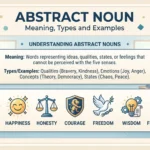
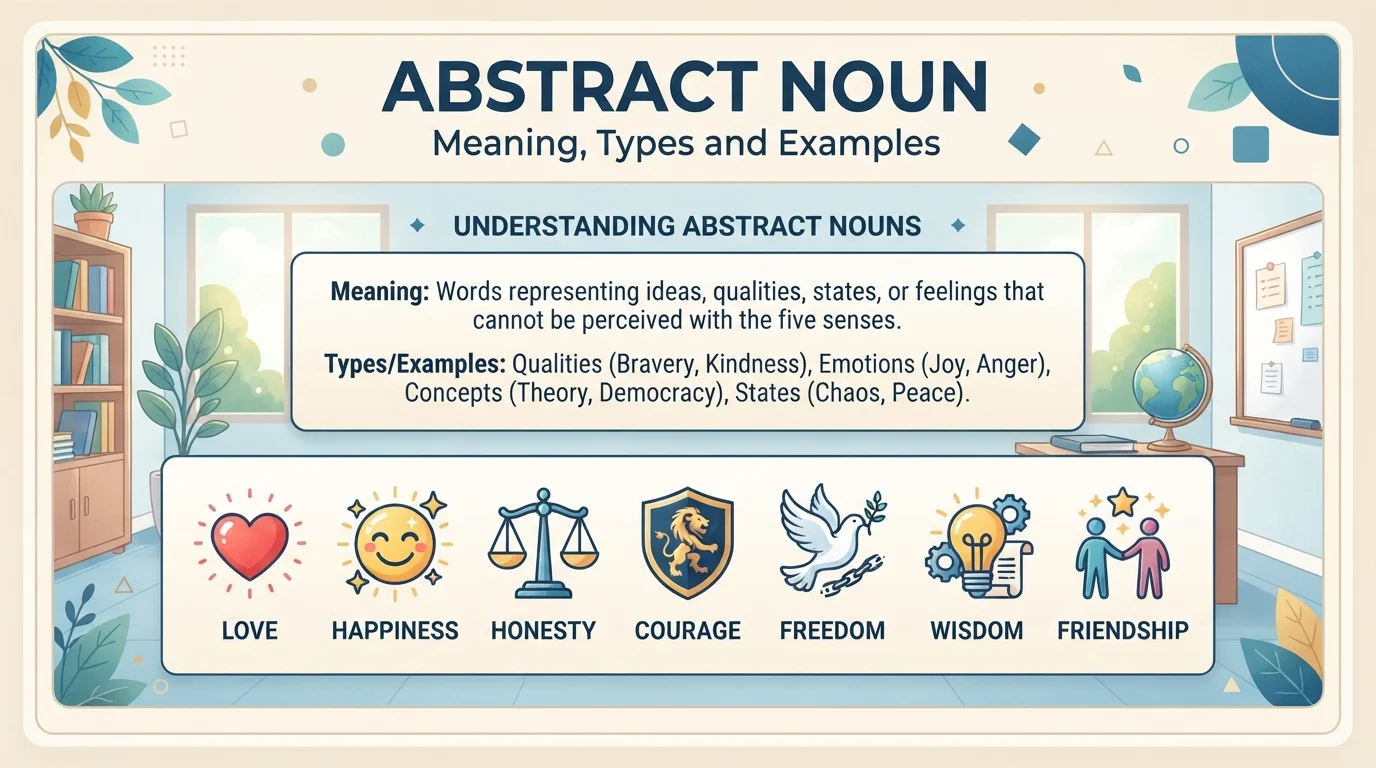
An abstract noun is a noun that names an idea, feeling, emotion, quality, state, or concept that cannot be physically touched or held. Examples include love, honesty, bravery, happiness, freedom, and wisdom. Abstract nouns describe things we experience, understand, or feel rather than physical objects we can see or touch.
What Is an Abstract Noun?
An abstract noun is a word that represents something intangible, such as an emotion, quality, idea, condition, or experience.
The word abstract means something that exists as an idea or concept rather than as a physical object.
For example:
- Love makes life meaningful.
- Honesty builds trust.
- Happiness is important for everyone.
- Courage helps people face difficulties.
- Freedom is a basic human value.
In these sentences, love, honesty, happiness, courage, and freedom are abstract nouns because they describe concepts rather than physical things.
Abstract Noun Definition
In English grammar, an abstract noun is defined as a noun that names a quality, state, feeling, action, or idea that has no physical form.
Simple definition: An abstract noun names something that you can feel, understand, or experience but cannot physically touch.
For example, beauty is an abstract noun because it describes a quality. You can see a beautiful painting, but beauty itself cannot be touched.
Why Do People Confuse Abstract and Concrete Nouns?
Students sometimes confuse abstract nouns with concrete nouns because both can describe the same situation or experience.
The main difference is that abstract nouns refer to intangible concepts, while concrete nouns refer to things that can be experienced through the physical senses.
For example:
- Beauty: An abstract quality.
- Flower: A concrete object.
- Happiness: An abstract emotion.
- Smile: A visible physical expression.
- Wisdom: An abstract quality.
- Book: A concrete object.
Consider this sentence:
“Her kindness made everyone happy.”
Here, kindness is an abstract noun because it describes a quality. Everyone is a pronoun, while the sentence also uses the adjective happy.
Understanding this difference makes it easier to recognize abstract nouns in everyday English.
Types of Abstract Nouns
Abstract nouns can be grouped according to the ideas, feelings, qualities, and conditions they represent. The following categories are particularly useful for English learners.
1. Abstract Nouns of Qualities
These nouns describe the characteristics or qualities of a person, animal, or thing.
Examples:
- Honesty
- Bravery
- Kindness
- Wisdom
- Patience
- Generosity
- Loyalty
- Intelligence
- Confidence
- Humility
Example sentences:
- Honesty is the foundation of a good relationship.
- Her kindness impressed everyone.
- Bravery helps people overcome fear.
2. Abstract Nouns of Feelings and Emotions
These nouns describe emotional experiences and feelings.
Examples:
- Love
- Happiness
- Sadness
- Anger
- Fear
- Joy
- Excitement
- Jealousy
- Hope
- Anxiety
Example sentences:
- Love brings people together.
- Happiness makes life more enjoyable.
- Fear sometimes prevents people from taking risks.
3. Abstract Nouns of Ideas and Concepts
These nouns represent thoughts, beliefs, principles, and concepts.
Examples:
- Freedom
- Justice
- Peace
- Equality
- Knowledge
- Truth
- Democracy
- Friendship
- Education
- Faith
Example sentences:
- Freedom is important for every individual.
- Justice should be available to everyone.
- Knowledge gives people the power to make informed decisions.
4. Abstract Nouns of States and Conditions
These nouns describe a particular state, situation, or condition.
Examples:
- Childhood
- Poverty
- Health
- Illness
- Youth
- Death
- Silence
- Sleep
- Poverty
- Hunger
Example sentences:
- Childhood is an important stage of life.
- Good health is essential for happiness.
- Silence can sometimes communicate more than words.
5. Abstract Nouns of Actions and Processes
Some nouns name actions, activities, or processes that are understood as concepts rather than physical objects.
Examples:
- Movement
- Growth
- Development
- Decision
- Arrival
- Discovery
- Education
- Improvement
- Communication
- Celebration
Example sentences:
- Growth requires patience and effort.
- Her decision surprised everyone.
- Education plays an important role in personal development.
Abstract Noun vs. Concrete Noun: Comparison Table
Abstract nouns and concrete nouns are two important categories of nouns. Understanding their differences will help you identify them correctly.
| Feature | Abstract Noun | Concrete Noun |
|---|---|---|
| Meaning | Names an idea or quality | Names a physical entity |
| Physical form | No physical form | Has a physical form |
| Senses | Experienced mentally or emotionally | Experienced through physical senses |
| Examples | Love, honesty, courage | Table, flower, book |
| Usage | Describes feelings and concepts | Describes people and objects |
| Example sentence | Kindness matters. | The girl has a book. |
Remember: An abstract noun names an intangible concept, while a concrete noun names something physical.
How to Form Abstract Nouns From Other Words
Many abstract nouns are formed by adding suffixes to adjectives, verbs, and sometimes other nouns. Learning these word formation patterns can help expand your English vocabulary.
1. Abstract Nouns Formed From Adjectives
Abstract nouns can be created from adjectives by adding suffixes such as ness, ity, and ty.
| Adjective | Abstract Noun |
|---|---|
| Kind | Kindness |
| Happy | Happiness |
| Honest | Honesty |
| Brave | Bravery |
| Beautiful | Beauty |
| Pure | Purity |
| Weak | Weakness |
| Dark | Darkness |
| Active | Activity |
| Equal | Equality |
Examples:
- Kindness is a wonderful quality.
- Happiness is important for a healthy life.
- Honesty creates strong relationships.
2. Abstract Nouns Formed From Verbs
Many abstract nouns are formed from verbs by adding suffixes such as ment, tion, sion, and ance.
| Verb | Abstract Noun |
|---|---|
| Develop | Development |
| Improve | Improvement |
| Educate | Education |
| Decide | Decision |
| Inform | Information |
| Perform | Performance |
| Accept | Acceptance |
| Appear | Appearance |
| Move | Movement |
| Agree | Agreement |
Examples:
- Education creates opportunities.
- His decision changed everything.
- Continuous improvement leads to progress.
3. Abstract Nouns Formed From Other Nouns
Some abstract nouns are formed from existing nouns.
| Noun | Abstract Noun |
|---|---|
| Friend | Friendship |
| Child | Childhood |
| Brother | Brotherhood |
| Mother | Motherhood |
| King | Kingship |
| Leader | Leadership |
| Owner | Ownership |
| Citizen | Citizenship |
| Scholar | Scholarship |
| Member | Membership |
Examples:
- Friendship makes life more meaningful.
- Childhood is full of memorable experiences.
- Leadership requires responsibility.
50+ Examples of Abstract Nouns in Sentences
The following examples show how abstract nouns are used in everyday English.
- Love: Love makes the world a better place.
- Honesty: Honesty is always the best policy.
- Happiness: Happiness comes from appreciating what you have.
- Bravery: The firefighter showed great bravery.
- Kindness: Kindness costs nothing but means a lot.
- Wisdom: Wisdom comes from experience and learning.
- Freedom: Everyone deserves freedom and respect.
- Friendship: Their friendship has lasted for years.
- Beauty: Beauty is more than physical appearance.
- Courage: Courage helps us face our fears.
- Patience: Patience is necessary when learning a new skill.
- Anger: Anger can affect our decisions.
- Sadness: She tried to hide her sadness.
- Fear: Fear stopped him from speaking.
- Knowledge: Knowledge opens doors to new opportunities.
- Justice: Justice should be equal for everyone.
- Peace: Everyone wishes to live in peace.
- Confidence: Confidence helps people achieve their goals.
- Generosity: Her generosity inspired the entire community.
- Loyalty: Loyalty is important in every friendship.
- Childhood: My childhood was full of wonderful memories.
- Poverty: Poverty affects millions of people.
- Health: Good health is a valuable blessing.
- Youth: Youth is a time of learning and discovery.
- Silence: Silence filled the room.
- Hope: Hope gives people strength during difficult times.
- Faith: Faith helps many people overcome challenges.
- Equality: Equality creates a fair society.
- Education: Education changes lives.
- Truth: The truth eventually became clear.
- Jealousy: Jealousy can damage relationships.
- Excitement: The children could not hide their excitement.
- Intelligence: Intelligence can take many forms.
- Humility: Humility is a sign of good character.
- Creativity: Creativity helps people find new solutions.
- Growth: Personal growth requires continuous effort.
- Development: The development of technology has changed communication.
- Improvement: Your improvement is impressive.
- Decision: Making the right decision requires careful thought.
- Discovery: The discovery changed scientific understanding.
- Movement: Movement is essential for physical fitness.
- Celebration: The celebration continued throughout the evening.
- Success: Success requires dedication and hard work.
- Failure: Failure can teach valuable lessons.
- Respect: Everyone deserves respect.
- Pride: She felt pride in her achievements.
- Loneliness: Loneliness can affect emotional well being.
- Curiosity: Curiosity encourages people to learn.
- Responsibility: Responsibility is an important life skill.
- Imagination: Imagination allows us to explore new ideas.
- Comfort: Her words brought comfort to the family.
- Satisfaction: He felt satisfaction after completing the project.
- Ambition: Ambition motivates people to achieve more.
- Enthusiasm: Her enthusiasm made the lesson enjoyable.
- Independence: Independence gives people greater control over their lives.
When to Use Abstract Nouns
Abstract nouns are useful whenever you want to communicate ideas, emotions, qualities, or conditions rather than physical objects.
Here are some common situations in which you can use them.
1. To Describe Feelings
Use abstract nouns to communicate emotions and personal experiences.
Examples:
- I felt happiness after hearing the news.
- Her sadness was understandable.
- Fear prevented him from taking action.
2. To Describe Personal Qualities
Use abstract nouns to discuss someone’s character or behavior.
Examples:
- Honesty builds trust.
- Patience is an important quality.
- Her generosity helped many people.
3. To Discuss Ideas and Principles
Abstract nouns are especially useful when discussing social, educational, or philosophical concepts.
Examples:
- Freedom is a fundamental human value.
- Equality should be protected.
- Knowledge is essential for progress.
4. To Describe States and Experiences
Use abstract nouns to talk about different stages or conditions of life.
Examples:
- Childhood is an unforgettable experience.
- Good health improves quality of life.
- Silence can sometimes be comforting.
Common Mistakes When Using Abstract Nouns
English learners sometimes make mistakes when identifying and using abstract nouns. Understanding these common errors can help you improve your grammar.
Mistake 1: Confusing Abstract Nouns With Adjectives
An adjective describes a noun, while an abstract noun names a quality or concept.
Incorrect identification: Happy is an abstract noun.
Correct identification: Happiness is an abstract noun, while happy is an adjective.
Examples:
- She is happy. (Happy is an adjective.)
- Her happiness is obvious. (Happiness is an abstract noun.)
Mistake 2: Assuming All Nouns Are Concrete
Not every noun represents something physical.
For example:
- Love is an abstract noun.
- Table is a concrete noun.
- Freedom is an abstract noun.
- Chair is a concrete noun.
Mistake 3: Assuming Abstract Nouns Cannot Be Countable
Many abstract nouns are uncountable, but some can be countable depending on their meaning and context.
Examples:
- She has great knowledge of history. (Uncountable.)
- It was a wonderful experience. (Countable.)
- I need some advice. (Uncountable.)
- He shared several interesting ideas. (Countable.)
Mistake 4: Using Incorrect Word Forms
Some students confuse adjectives with their related abstract nouns.
| Incorrect Form | Correct Abstract Noun |
|---|---|
| Kind | Kindness |
| Happy | Happiness |
| Brave | Bravery |
| Honest | Honesty |
| Beautiful | Beauty |
| Wise | Wisdom |
Remember that the correct word form depends on its grammatical role in the sentence.
Mistake 5: Thinking Abstract Nouns Cannot Be Experienced
Abstract nouns cannot be physically touched, but they can be felt, understood, or experienced.
For example, happiness is not a physical object, but people can experience happiness in their daily lives.
How to Identify an Abstract Noun in a Sentence
You can identify an abstract noun by asking what a particular word represents.
Follow these simple steps:
- Find the noun in the sentence.
- Determine whether it names a physical object or an intangible concept.
- Ask whether it represents a feeling, quality, idea, state, or experience.
- If it describes something intangible, it may be an abstract noun.
Example 1: Her kindness impressed everyone.
Kindness is an abstract noun because it names a quality.
Example 2: The boy carried a bag.
Bag is a concrete noun because it refers to a physical object.
Example 3: Freedom is important.
Freedom is an abstract noun because it represents an idea or concept.
Memory Trick: How to Remember Abstract Nouns
Use this simple memory trick:
Abstract = An idea you cannot physically touch.
Think about these examples:
- Love: You can feel it, but cannot touch it.
- Happiness: You can experience it, but cannot hold it.
- Honesty: You can demonstrate it, but cannot see it as a physical object.
- Freedom: You can enjoy it, but cannot physically pick it up.
Remember the difference:
Abstract nouns describe intangible concepts, while concrete nouns describe physical things.
This simple rule will help you identify abstract nouns in sentences and everyday conversations.
American vs. British English
There is generally no difference between American and British English in the meaning, definition, or grammatical use of abstract nouns.
Both varieties recognize words such as love, happiness, honesty, freedom, courage, and wisdom as abstract nouns.
However, some individual words related to abstract concepts may have different spellings in American and British English.
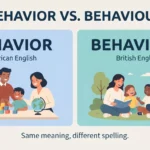
| American English | British English |
|---|---|
| Behavior | Behaviour |
| Honor | Honour |
| Humor | Humour |
| Labor | Labour |
| Organization | Organisation |
These spelling differences do not change the basic concept of abstract nouns.
Abstract Nouns vs. Collective Nouns vs. Material Nouns
Students sometimes confuse different categories of nouns. Understanding their meanings makes English grammar easier.
| Type of Noun | Meaning | Examples |
|---|---|---|
| Abstract noun | Names an idea, feeling, or quality | Love, honesty, happiness |
| Concrete noun | Names something physical | Book, table, flower |
| Collective noun | Names a group considered as a unit | Team, family, committee |
| Material noun | Names a substance or material | Gold, water, silver |
| Proper noun | Names a particular person or place | Sarah, London, Pakistan |
| Common noun | Names a general person, place, or thing | Teacher, city, country |
Each category describes a different way of classifying nouns.
Similar Grammar Terms Related to Abstract Nouns
Learning related grammar terms can help you understand abstract nouns more effectively.
1. Concrete Noun: A noun that names something physical, such as a chair, dog, or house.
2. Common Noun: A general name for a person, place, animal, or thing, such as teacher, city, or book.
3. Collective Noun: A noun that refers to a group, such as team, audience, or family.
4. Material Noun: A noun that names a substance, such as gold, cotton, or iron.
5. Proper Noun: The specific name of a person, place, or organization, such as Ahmed, Lahore, or Google.
6. Countable Noun: A noun that can be counted, such as book, apple, or experience.
7. Uncountable Noun: A noun that is not normally counted individually, such as information, advice, or happiness.
Final Verdict
An abstract noun is a word that names something intangible, including an idea, emotion, quality, state, or experience. Unlike concrete nouns, abstract nouns do not have a physical form that can be touched or held.
Common examples include love, honesty, happiness, courage, wisdom, freedom, friendship, and patience.
Abstract nouns can also be formed from adjectives, verbs, and other nouns by adding suffixes such as ness, ity, ment, tion, and ship. However, not every abstract noun follows a particular word formation rule.
Understanding abstract nouns helps you improve your vocabulary, recognize different parts of speech, and express thoughts and feelings more accurately in English.
Frequently Asked Questions About Abstract Nouns
1. What is an abstract noun in simple words?
An abstract noun is a word that names something you cannot physically touch, such as a feeling, quality, idea, or state. Examples include love, happiness, honesty, and courage.
2. What are 10 examples of abstract nouns?
Ten common examples of abstract nouns are:
- Love
- Happiness
- Honesty
- Bravery
- Freedom
- Wisdom
- Kindness
- Courage
- Friendship
- Patience
These words represent feelings, qualities, and ideas rather than physical objects.
3. What are the five types of abstract nouns?
Abstract nouns can be grouped into five useful categories:
- Qualities: Honesty, bravery, kindness.
- Feelings and emotions: Love, sadness, happiness.
- Ideas and concepts: Freedom, justice, equality.
- States and conditions: Childhood, health, poverty.
- Actions and processes: Development, movement, improvement.
These categories help explain the different meanings abstract nouns can express.
4. What is the difference between abstract and concrete nouns?
An abstract noun names something intangible, such as love, courage, or happiness. A concrete noun names something physical, such as a book, chair, or flower. The main difference is that concrete nouns have a physical form, while abstract nouns represent concepts or experiences.
5. How do you form abstract nouns?
Abstract nouns can be formed from adjectives, verbs, and other nouns by adding suffixes.
Examples:
- Kind + ness = Kindness.
- Happy + ness = Happiness.
- Develop + ment = Development.
- Educate + tion = Education.
- Friend + ship = Friendship.
Some abstract nouns have irregular or unique forms, such as beauty and wisdom.
6. Is love an abstract noun?
Yes, love is an abstract noun because it represents an emotion or feeling that cannot be physically touched. People can experience and express love, but it does not have a physical form.
7. Is happiness an abstract noun?
Yes, happiness is an abstract noun. It describes an emotional state or feeling that people can experience but cannot physically hold.
8. Can abstract nouns be plural?
Yes, some abstract nouns can be plural, depending on their meaning and usage.
Examples:
- She shared several interesting experiences.
- His kindnesses were remembered by everyone.
- The company celebrated its many successes.
However, many abstract nouns, such as happiness, honesty, and freedom, are generally uncountable and are not normally used in the plural.
9. What are abstract nouns formed from adjectives?
Abstract nouns formed from adjectives name qualities or characteristics.
Examples:
| Adjective | Abstract Noun |
|---|---|
| Kind | Kindness |
| Happy | Happiness |
| Brave | Bravery |
| Honest | Honesty |
| Beautiful | Beauty |
| Wise | Wisdom |
10. What are abstract nouns formed from verbs?
These are abstract nouns created from verbs to name actions, processes, or results.
Examples:
| Verb | Abstract Noun |
|---|---|
| Educate | Education |
| Develop | Development |
| Improve | Improvement |
| Decide | Decision |
| Move | Movement |
| Perform | Performance |
11. Is childhood an abstract noun?
Yes, childhood is an abstract noun because it describes a stage or period of life rather than a physical object. It refers to the time when someone is a child.
12. What is the easiest way to identify an abstract noun?
Ask yourself whether the word represents a feeling, quality, idea, state, or experience rather than a physical object. If it names something intangible, it is likely an abstract noun.
Remember This
Here are the most important points to remember about abstract nouns:
- Abstract nouns name intangible ideas, feelings, qualities, and states.
- They cannot be physically touched or held.
- Love, happiness, honesty, and courage are common examples.
- Abstract nouns can be formed from adjectives, verbs, and other nouns.
- Some abstract nouns are countable, while others are uncountable.
- Abstract nouns are different from concrete nouns.
- They help us express emotions, experiences, and complex ideas.
The easiest way to remember: If a noun represents an idea, feeling, quality, or condition rather than a physical object, it may be an abstract noun.
Conclusion
Abstract nouns are an essential part of English grammar because they allow us to express feelings, emotions, qualities, ideas, and experiences. Words such as love, happiness, honesty, courage, wisdom, and freedom help us communicate things that cannot be physically seen or touched. They make our language more meaningful by allowing us to describe human experiences and important concepts.
Learning how abstract nouns work will help you recognize different types of nouns, form new vocabulary, and construct better sentences. Whether you are a beginner, student, or ESL learner, understanding the difference between abstract and concrete nouns is an important step toward improving your English grammar. Practice identifying abstract nouns in everyday reading and writing, and you will become more confident in using them correctly.