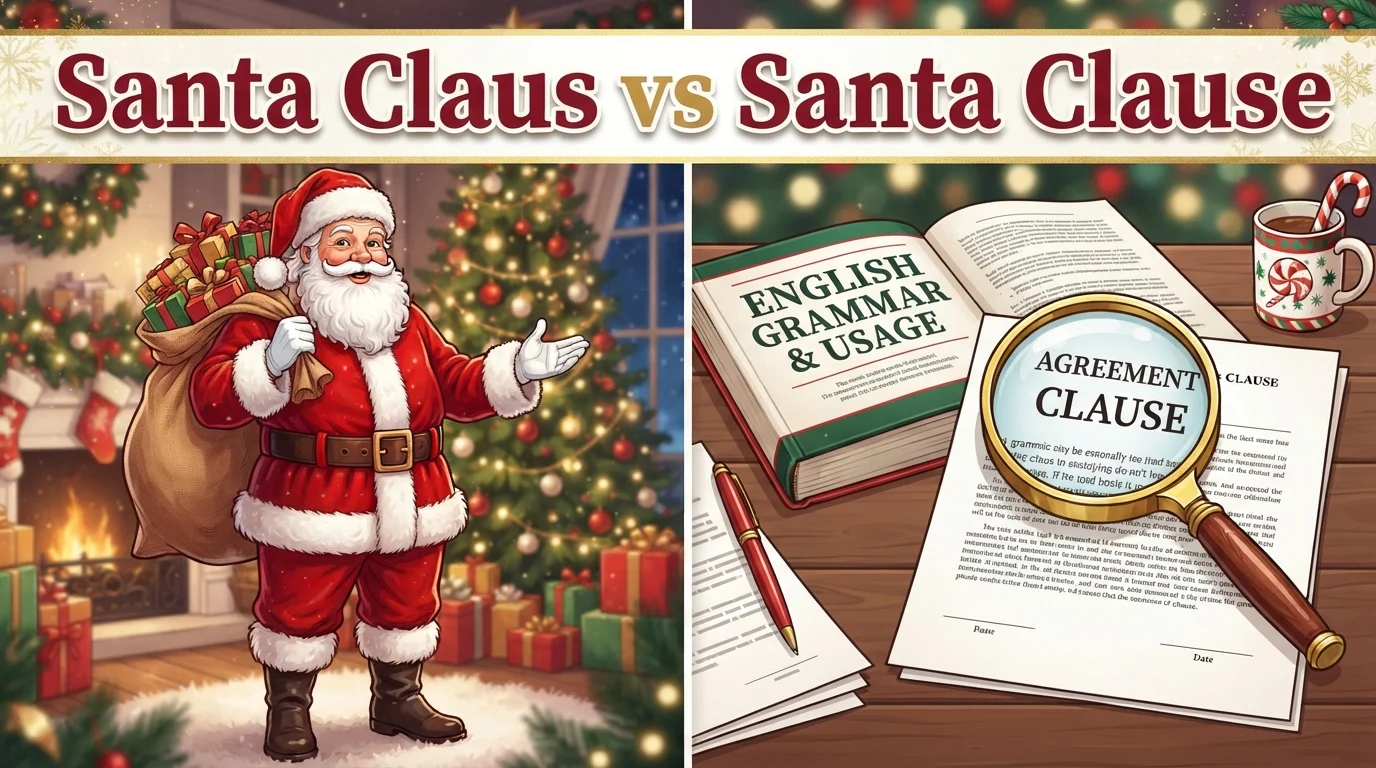
Have you ever wondered whether the correct spelling is Santa Claus or Santa Clause? These two expressions look almost identical, but they have different meanings. Santa Claus is the traditional name of the cheerful Christmas figure who delivers presents to children. Santa Clause, on the other hand, is usually a misspelling when someone intends to refer to that character. However, the phrase has a special connection to the popular Christmas movie The Santa Clause.
Understanding the difference between Santa Claus and Santa Clause helps you avoid spelling mistakes in Christmas messages, school assignments, articles, and everyday writing. Although the words sound exactly alike, only one is the standard spelling for the famous Christmas character.
In this guide, you will learn what Santa Claus and Santa Clause mean, how to use each expression correctly, why people confuse them, and how to remember the difference.
Quick Answer: Santa Claus vs Santa Clause
Santa Claus is the correct spelling for the legendary Christmas character who brings gifts to children on Christmas Eve. Santa Clause is not the standard spelling of his name. The word clause refers to a grammatical unit or a section of a legal document. However, The Santa Clause is also the title of a well-known Christmas movie that plays on the difference between the two words.
What Does Santa Claus Mean?
Santa Claus is the traditional name of the fictional Christmas character who is believed to bring presents to children around the world on Christmas Eve.
He is commonly portrayed as a friendly, elderly man with a white beard, a red suit, and a black belt. According to popular Christmas stories, he lives at the North Pole, travels in a sleigh pulled by reindeer, and delivers gifts to children.
The name Santa Claus has historical connections to Saint Nicholas, a Christian bishop known for his generosity and gift-giving traditions. Over time, stories and cultural traditions helped shape the modern image of Santa Claus.
Examples of Santa Claus in Sentences
- The children are excited to see Santa Claus at the shopping mall.
- My little brother believes that Santa Claus brings presents on Christmas Eve.
- We decorated the Christmas tree with a Santa Claus ornament.
- The school invited Santa Claus to give gifts to the students.
- Every year, my family watches a movie about Santa Claus.
In all these examples, Santa Claus refers to the Christmas gift-giver.
What Does Santa Clause Mean?
Santa Clause is not the correct spelling of the Christmas character’s name. It combines the name Santa with the word clause, which has a completely different meaning.
A clause is a group of words containing a subject and a verb. In grammar, a clause can express a complete or incomplete thought. In legal writing, a clause is a specific section or provision in a contract, agreement, or other formal document.
The expression Santa Clause can therefore appear as a wordplay or as part of a title, but it should not replace Santa Claus when referring to the Christmas character.
Examples of Clause in Sentences
- The teacher explained how to identify a dependent clause.
- This sentence contains an independent clause.
- The contract includes a clause about payment deadlines.
- You should read every clause before signing the agreement.
- The final clause of the document explains the cancellation policy.
Notice that clause refers to a grammatical or legal section, not the Christmas character.
Santa Claus vs Santa Clause: Key Differences
Although these expressions sound alike, their meanings and uses are different.
| Feature | Santa Claus | Santa Clause |
|---|---|---|
| Meaning | The Christmas gift-giving character | A phrase combining Santa with the word clause |
| Standard usage | Correct name of the Christmas character | Not the standard spelling of the character’s name |
| Word origin | Connected to Saint Nicholas | Uses the English word clause |
| Common context | Christmas stories and celebrations | Grammar, legal writing, and wordplay |
| Example | Santa Claus brought presents. | The contract contains a special clause. |
The easiest way to remember the difference is that Claus is the name, while clause is a grammatical or legal term.
Why Do People Confuse Santa Claus and Santa Clause?
People often confuse these expressions because they have identical pronunciation in standard English. Both sound like “klawz.”
There are several reasons for this common spelling confusion.
1. Similar Pronunciation
Santa Claus and Santa Clause sound exactly alike, so listeners cannot easily identify which spelling is being used without seeing it written.
2. Similar Spelling
The two words differ by only one letter. Claus ends with the letters aus, while clause ends with ause. This small difference makes typing mistakes easy.
3. The Word Clause Is Familiar
Students frequently encounter the word clause in grammar lessons. People who know this spelling may accidentally use it when writing the name of the Christmas character.
4. The Movie The Santa Clause
The 1994 Christmas comedy The Santa Clause, starring Tim Allen, also contributes to the confusion. Its title uses a deliberate pun. In the movie, the main character becomes Santa Claus after putting on Santa’s suit and accepting the responsibilities associated with the role.
The title plays on the similarity between the character’s name and the word clause.
Is Santa Claus or Santa Clause Correct?
If you are referring to the Christmas character, Santa Claus is always the standard spelling.
Use Santa Claus when writing about Christmas traditions, gift-giving, children’s stories, holiday decorations, or the legendary man who delivers presents.
Use the word clause when discussing grammar or a section of a legal document. You may also write The Santa Clause when referring to the movie’s official title.
Incorrect: Santa Clause brings presents to children.
Correct: Santa Claus brings presents to children.
Correct: The lawyer added a new clause to the agreement.
Correct: We watched The Santa Clause during the Christmas holidays.
Santa Claus vs Santa Clause: Common Mistakes to Avoid
Here are some common mistakes people make when using these expressions.
Mistake 1: Writing Santa Clause Instead of Santa Claus
Incorrect: Santa Clause is coming to town.
Correct: Santa Claus is coming to town.
Mistake 2: Using Clause for the Christmas Character
Incorrect: Children write letters to Santa Clause.
Correct: Children write letters to Santa Claus.
Mistake 3: Assuming Clause Is Always Wrong
The word clause is a perfectly correct English word. It is only incorrect when used as a substitute for Claus in the Christmas character’s name.
Correct: The teacher asked us to identify the main clause.
Mistake 4: Confusing the Movie Title With the Character’s Name
The movie title is The Santa Clause, but the character is called Santa Claus.
Remember that a movie title can use wordplay without changing the standard spelling of a person’s or character’s name.
Easy Trick to Remember the Difference
Use this simple memory trick:
Claus = Christmas character
Clause = Grammar or legal document
Think of the final letters:
- Claus ends with aus. Remember it as the name of Santa.
- Clause ends with ause. Remember it as a word used in grammar and legal writing.
You can also remember this sentence:
“Santa Claus brings gifts, while a clause appears in a sentence or contract.”
This simple trick can help you choose the correct spelling every time.
Frequently Asked Questions
1. Is it Santa Claus or Santa Clause?
Santa Claus is the correct spelling for the Christmas character who brings presents to children. Santa Clause is not the standard spelling of his name, although it appears in the title of the movie The Santa Clause.
2. Why is it called Santa Claus and not Santa Clause?
The name Santa Claus developed from the Dutch name Sinterklaas, which refers to Saint Nicholas. The spelling Santa Claus became established in English as the name of the Christmas character.
3. What does Santa Clause mean?
Santa Clause is not a standard name for the Christmas character. The word clause means a grammatical group of words containing a subject and a verb, or a section of a legal document. It can also be used in wordplay, as in the movie title The Santa Clause.
4. Is Santa Claus named after Saint Nicholas?
Yes. The modern Santa Claus tradition has historical roots in Saint Nicholas, a Christian bishop known for his generosity and gift-giving. Dutch traditions surrounding Sinterklaas helped influence the English name Santa Claus.
5. Why is the movie called The Santa Clause?
The movie The Santa Clause uses a pun based on the words Claus and clause. In the story, becoming Santa Claus involves accepting a special obligation. The title makes this responsibility sound like a legal clause.
6. Are Santa Claus and Santa Clause pronounced the same?
Yes. In standard English, Santa Claus and Santa Clause are pronounced the same way. Their meanings and spellings, however, are different.
7. Can I write Santa Clause in a Christmas greeting?
No, not if you mean the Christmas character. Write Santa Claus instead. For example, “May Santa Claus bring you lots of happiness this Christmas!”
8. What is the plural of clause?
The plural of clause is clauses. For example, “The contract contains several important clauses.” Santa Claus is a proper name and is not normally made plural in ordinary usage.
Conclusion
The difference between Santa Claus and Santa Clause is simple once you understand their meanings. Santa Claus is the correct name of the famous Christmas character who brings gifts to children. Clause is a separate English word used in grammar and legal writing.
Although both expressions sound the same, they are not interchangeable. Remember Claus for Christmas and clause for grammar or legal documents. This easy distinction will help you avoid spelling mistakes in your Christmas messages, articles, and everyday writing.