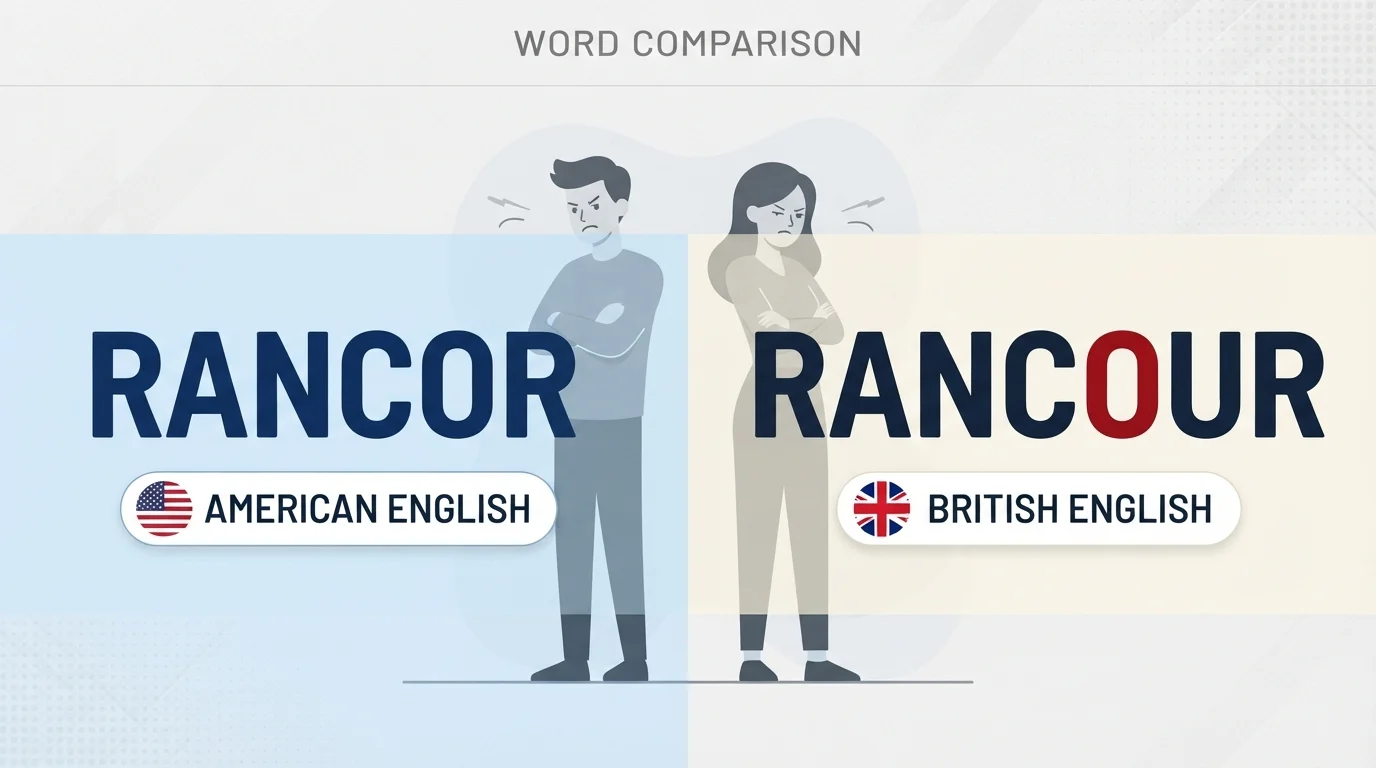
Are you confused about whether to write rancor or rancour? Both spellings are correct, and they have exactly the same meaning. The only difference is the variety of English in which they are commonly used. Rancor is the preferred American English spelling, while rancour is the standard British English spelling.
Both words describe a deep, lasting feeling of bitterness, resentment, or ill will toward someone. They are often used when a person continues to feel angry or resentful because of a past disagreement, insult, betrayal, or conflict.
Understanding the difference between rancor and rancour can help you choose the appropriate spelling for your audience and maintain consistency in your writing. In this guide, you will learn their meanings, differences, pronunciation, sentence examples, common mistakes, and simple ways to remember which spelling to use.
Quick Answer: Rancor vs Rancour
Rancor and rancour have the same meaning: deep bitterness, resentment, or lasting hostility toward someone. The difference is regional spelling. Rancor is used in American English, whereas rancour is preferred in British English, Canadian English, and other varieties that commonly follow British spelling conventions. Neither spelling is incorrect. Choose the one that matches your intended English variety.
What Does Rancor Mean?
Rancor is a noun that means deep, persistent bitterness, resentment, or ill will toward another person. It describes a strong negative feeling that continues over time, often because of an unpleasant experience, disagreement, betrayal, or personal conflict.
People may feel rancor when they cannot forgive someone for something hurtful that happened in the past. Unlike temporary anger, rancor often lasts for a long time.
The spelling rancor is primarily used in American English.
Examples of Rancor in Sentences
- Despite their disagreement, the two friends ended their conversation without rancor.
- Years of competition created considerable rancor between the two families.
- She spoke about her former colleague without any rancor.
- The political debate was filled with bitterness and rancor.
- He still felt rancor toward the person who had betrayed him.
In these examples, rancor refers to lasting bitterness or resentment.
What Does Rancour Mean?
Rancour is a noun that has exactly the same meaning as rancor. It describes a deep and lasting feeling of bitterness, hostility, or resentment toward someone.
The spelling rancour is commonly used in British English and other varieties that follow British spelling conventions.
There is no difference in meaning, pronunciation, or grammatical function between rancor and rancour. Only the spelling changes.
Examples of Rancour in Sentences
- The disagreement ended without any rancour.
- She refused to hold rancour against her former friend.
- Years of misunderstanding had created deep rancour between the neighbours.
- The discussion was conducted without personal rancour.
- He expressed his disappointment without showing rancour.
Each sentence could use rancor instead of rancour without changing its meaning.
Rancor vs Rancour: Key Differences
The main difference between these two words is their spelling preference in different varieties of English.
| Feature | Rancor | Rancour |
|---|---|---|
| Meaning | Deep bitterness or resentment | Deep bitterness or resentment |
| English variety | American English | British English |
| Pronunciation | Same | Same |
| Part of speech | Noun | Noun |
| Usage | Preferred in the United States | Preferred in the United Kingdom and other British English contexts |
| Example | He spoke without rancor. | He spoke without rancour. |
Remember: Rancor is American English, while rancour is British English. Both are correct.
Is Rancor or Rancour Correct?
Both spellings are correct. Your choice depends on the type of English you are using.
Use rancor when writing in American English. This spelling is suitable for American publications, academic assignments following American conventions, and content intended for readers in the United States.
Use rancour when writing in British English. This spelling is appropriate for British publications, educational materials following British conventions, and writing intended for readers in the United Kingdom.
For example:
American English: The two neighbours settled their dispute without rancor.
British English: The two neighbours settled their dispute without rancour.
Both sentences are grammatically correct and communicate the same idea.
Rancor vs Rancour Pronunciation
Rancor and rancour have the same pronunciation. The extra letter u in the British spelling does not change how the word is spoken.
The word is commonly pronounced:
RAN-kər
Phonetic transcription: /ˈræŋ.kər/
The first syllable sounds like “ran,” and the second syllable sounds like “ker.”
Synonyms of Rancor and Rancour
Several English words have meanings similar to rancor and rancour. However, their strength and usage may vary depending on the context.
| Synonym | Meaning |
|---|---|
| Resentment | Bitter feelings caused by unfair treatment or an unpleasant experience |
| Bitterness | Strong feelings of anger, disappointment, or unhappiness |
| Hostility | Unfriendly or aggressive feelings toward someone |
| Animosity | Strong dislike or ill will toward another person |
| Grudge | A lasting feeling of resentment because of something that happened in the past |
| Antagonism | Opposition or active hostility toward someone |
| Enmity | Deep-seated hatred or hostility |
Examples Using Similar Words
- She felt resentment after being treated unfairly.
- There was considerable hostility between the rival groups.
- He held a grudge against his former business partner.
- Their personal conflict eventually developed into open animosity.
- The two families lived in enmity for many years.
Antonyms of Rancor and Rancour
Antonyms are words that have opposite or nearly opposite meanings.
Some common antonyms of rancor and rancour include:
| Antonym | Meaning |
|---|---|
| Forgiveness | The act of letting go of resentment or anger |
| Goodwill | A friendly and helpful attitude toward others |
| Kindness | The quality of being considerate and caring |
| Harmony | A state of peaceful agreement |
| Friendship | A positive relationship based on affection and trust |
| Amity | Friendly relations between people or groups |
For example:
- They resolved their differences and developed a relationship based on goodwill.
- Forgiveness helped her move beyond the painful experience.
- The two communities worked together to restore harmony.
Common Mistakes to Avoid
Although rancor and rancour are both correct, writers sometimes use them inconsistently or misunderstand their meanings.
Mistake 1: Thinking One Spelling Is Incorrect
Incorrect assumption: Rancour is always a spelling mistake.
Correct understanding: Rancor is the American spelling, while rancour is the British spelling.
Mistake 2: Using Both Spellings in the Same Piece of Writing
If you are following American English conventions, use rancor consistently. If you are following British English conventions, use rancour consistently.
Mixing the spellings unnecessarily can make your writing look inconsistent.
Mistake 3: Confusing Rancor With Temporary Anger
Rancor generally describes deep or lasting bitterness rather than a brief moment of frustration.
For example:
“She felt angry when she missed the bus.”
This describes temporary anger.
“She still felt rancor toward her former business partner years after their disagreement.”
This describes lasting resentment.
Mistake 4: Using Rancor as an Adjective
Rancor is a noun, not an adjective.
Incorrect: He gave her a rancor response.
Correct: He responded with rancor.
Correct: He gave her a bitter response.
Easy Trick to Remember the Difference
Remember this simple spelling rule:
Rancor = American English
Rancour = British English
The easiest way to remember the difference is to notice the letter u in rancour. British English often retains the letter u in words such as colour, favour, honour, and rancour, while American English commonly uses color, favor, honor, and rancor.
You can remember the rule with this sentence:
“Americans write rancor, while British writers add a u to make rancour.”
Both spellings express the same feeling of deep bitterness or resentment.
Frequently Asked Questions
1. What is the difference between rancor and rancour?
There is no difference in meaning. Both words mean deep, lasting bitterness, resentment, or hostility. Rancor is the American English spelling, while rancour is the British English spelling.
2. Is rancor American or British English?
Rancor is the preferred spelling in American English. British English generally uses rancour, with an additional letter u.
3. Is rancour a correct English word?
Yes. Rancour is a completely correct English word. It is the standard British spelling of rancor and describes a deep feeling of bitterness or resentment.
4. How do you pronounce rancor and rancour?
Both words are pronounced in the same way, commonly as RAN-kər. The additional letter u in rancour does not affect its pronunciation.
5. Is rancor a noun or an adjective?
Rancor is a noun. It refers to a deep and lasting feeling of bitterness, resentment, or ill will. The adjective bitter can be used to describe a person or feeling associated with rancor.
6. What are the synonyms of rancor?
Common synonyms of rancor include resentment, bitterness, hostility, animosity, grudge, enmity, and antagonism. The most appropriate synonym depends on the context.
7. What is the opposite of rancor?
Common antonyms of rancor include forgiveness, goodwill, kindness, harmony, friendship, and amity. These words express positive feelings or peaceful relationships rather than lasting resentment.
8. Can I use rancor in British English?
Yes. Readers of British English will understand rancor, but rancour is the preferred British spelling. For consistency, it is best to follow the spelling conventions of your intended audience.
Conclusion
The difference between rancor and rancour is simply a matter of regional spelling. Both words describe a deep and lasting feeling of bitterness, resentment, or hostility toward someone.
Use rancor in American English and rancour in British English. Neither spelling is wrong, and both have the same pronunciation and meaning.
Remember this simple rule: Rancor is American, while rancour is British. Choosing the appropriate spelling and using it consistently will make your writing clearer and more professional.